Friday, November 30, 2018

The Colors of All the Cattle by Alexander McCall Smith

Image result for all the colors of cattle


I have written many times about my love of the No. 1 Ladies' Detective Agency books and that meeting author Alexander McCall Smith (here) is one of the highlights of my literary life.

In this latest installment, The Colors of All the Cattle, there are plenty of cups of red bush tea, generous slices of Mma Potokwane's cake, and the lenses of Mma Makutsi's glasses still flash a danger signal when she is upset. And, finally, Charlie, mechanic apprentice and detective in training, gets a serious girlfriend. He is also instrumental in solving the case of the hit-and-run motorist.

But it was the main thrust of the story that resonated with me. As it happens, Mma Ramotswe is reluctantly running for a seat on Gaborone's City Council. This is at the urging of Mma Potokwane, matron of the Orphan Farm - as insistent as only she can be. Her reasons for encouraging Mma Ramotswe in this endeavor are two-fold: one, that arch nemesis of Mma Makutsi and pretty much every one associated with the detective agency, Violet Sephotho, is running for the same seat and who knows what havoc she would wreak as a council member.

The other reason Mma P. is so adamant that her friend should run is her strong opposition to a developer's proposed building of a garish Big Fun Hotel next to a town cemetery. In a country that holds great reverence for its late family and friends, this will never do.

We are facing a similar issue here in Louisville. A developer wants to build a 33-story condo/apartment/retail center right at the entrance to one of our fine Frederick Law Olmsted parks. It would loom over our historic Cave Hill Cemetery.

Believe me, people - and I include myself - are quite upset about this and although there have been many meetings with the developer he seems unwilling to amend his plans.

The property is actually quite small. A mere triangle of land. To me, the design looks like someone attempting to stuff ten pounds of potatoes (although that is not the word I usually use) into a five pound bag. You get the picture.

To give you an idea of the scale of this monstrosity, the tallest building in Louisville, a downtown tower, is 35 stories. It fits in with other commercial buildings in the city center. Thirty-three stories in a residential area is outrageous. Not to mention that my family and I own 'property' in Cave Hill Cemetery and we would all be resting in the shadow of such a monolith for eternity.

The plans have not been approved by the planning commission and city council as yet, but this same developer recently got approval to tear down a three-story apartment building in a nearby residential area and is planning to build a 15-story condominium in its place. That was opposed by the neighborhood association (it took the developer to court and lost) and many residents of the area. 

But, back to Mma Ramotswe and her friends. Over tea, they spend time musing about greedy property developers, the difference between good progress and bad progress, the honesty or dishonesty of politicians, and the importance of voting in civic elections.

I won't tell you how things turn out for Mma Ramotswe and Gaborone and the late residents of the cemetery as that would spoil your enjoyment of this book. 

But, even if your city or town is not being overrun by concrete and glass high-rise buildings, I think you will be entertained by this tale. It is a charmer.

Friday, November 16, 2018

Away to the Abbey

Image result for abbey of gethsemani gift shop
Abbey of Gethsemani

It is time for my annual Thanksgiving week retreat to the Abbey of Gethsemani near Bardstown, Kentucky. I have been spending the holiday week with the monks for the past few years, and I have been on retreats to Gethesmani many times over the past 30 years or so. 

Last year, because the Abbey's guest house was closed for refurbishing, I retreated to Saint Meinrad Archabbey in Indiana. Although I spent a pleasant few days there, there is nothing quite like the silence and contemplative atmosphere of Gethsemani.

I'll have a private room with bath, a bed, a desk, a comfortable chair, and days of unstructured time.

I am so ready.

Of course, my biggest decision is what books to take. I usually pack more than I could ever read in a few days, but I never know what I might be in the mood for. The guesthouse has a wonderful library and I usually end up plucking a book or two off its shelves to explore as well.

After much consideration, I'll take only two books with me.

I just purchased a copy of The Bullet Journal Method by Ryder Carroll.  I have toyed with my own version of this popular way of tracking time and tasks, and although it might sound an odd choice to take on retreat, I want to give the author's ideas and suggestions uninterrupted attention.

This is the opening line:

The Bullet Journal method's mission is to help us become mindful about how we spend our two most valuable resources in life: our time and our energy.

Seems like a good choice for contemplating the upcoming year.

The other book is one I have had for a while but have not had the opportunity to fully examine: A Book That Takes Its Time - An Unhurried Adventure in Creative Mindfulness by the editors of FLOW magazine. It is filled with essays on slowing down, living with intention, and all sorts of creative paper goodies - postcards, stickers, collage elements, and fill-in lists. I love lists! It is a beautiful book and I can't wait to dive in. Slowly, of course.

I'll also take a few basic art supplies, my journal, and an open spirit. There are always surprising adventures to be enjoyed in this place that feels almost as familiar as home - but without chores and errands and the constant interruptions of technology.

If you are in America and celebrating this week, enjoy your Thanksgiving however you choose to spend it. 

Image result for a book that takes its timeThe Bullet Journal Method : Track the Past, Order the Present, Design the Future


Friday, November 2, 2018

The Library Book by Susan Orlean


I am here to offer you firsthand proof that the library is filled with magical happenings.

On Monday night I attended an author event at the Louisville Free Public Library. I was there to hear Susan Orlean talk about her latest non-fiction offering, The Library Book. She gave a splendid presentation, reading a few selections from the book, answering questions from the audience, and generally just charming us all with her relaxed conversation and humor.

The Library Book begins with the fire of the Los Angeles Library in 1986. A fire intentionally set that destroyed 400,000 books and damaged another 700,000. (I know. I shudder to think of the loss.) It is the largest library fire in U.S. history. The downtown building, erected in the 1926, was closed for seven years while renovation and reconstruction took place. 

This event prompted Ms. Orlean, many years later, to write this book. She is a big fan of libraries and in the book recalls her many trips as a child with her mother to their local library in Akron, Ohio. She loved that she was given free rein to roam the library, and as she said, "leave with books I hadn't paid for."

She also writes about the history of libraries in general and the day-to-day life of the institutions.

During the Q&A she spoke of her need for a private work space and of her writing process. She sorts her handwritten research notes onto 5"x 8" index cards (for this book she had 700 of them), and once she begins, aims to write 1000 words a day, revising and editing as she goes along.

After her talk, I made my way to the lobby to purchase this book and have her autograph it. I definitely felt a connection. After all, my mother was head librarian of a large branch library here in Louisville for many years; I had visited the Los Angeles Public Library (not many years before the fire) and remember the murals in its rotunda depicting the history of California; and my first job was as a page at our small neighborhood library earning 50 cents an hour. 

I had to have this book.

I stood in line, money in hand and ready to buy. But, when I got to the head of the line I was told that all the books were gone. 

Oh, dear.

I turned and looked at the folks standing in the autograph line and saw a gentleman holding a stack of seven or eight books in his arms. In my most charming manner, I approached him and said with a smile, "They are out of books. Would you consider arm wrestling me for one of yours?"

Well, dear Reader, the man did not even hesitate, but immediately handed me a book and said, "Merry Christmas!"

I was stunned. I protested that I would willingly pay him for it, but he declined asking me to make a donation to The Library Foundation instead.  I gladly made a gift in memory of my mother. 

I was last in line to have Ms. Orlean sign my newly acquired copy. We chatted a bit about libraries, my mother, books, and the generosity of the man in line.

So there you have it. Magical happenings in the library. Not only do I have The Library Book full of stories about libraries, but I also have my own story of how I came to own The Library Book

Author Susan Orlean
The Library Book

(My apologies for the terrible photo. 
The lighting in the auditorium was awful 
and my camera never fails to blur at inopportune moments.)

Friday, October 19, 2018

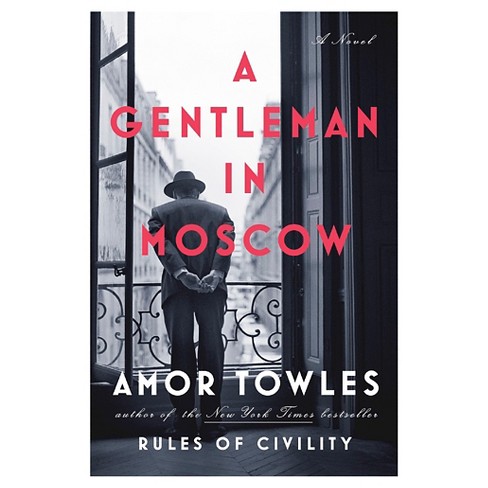
A Gentleman in Moscow by Amor Towles

Image result for a gentleman in moscow 

I have been reading, reading, reading A Gentleman in Moscow by Amor Towles. Although it is quite long (a little shy of 500 pages), it is definitely engaging.

Our story begins in 1922 and spans several decades. Count Alexander Ilyich Rostov has been put under house arrest and is  confined to the elegant Metropol Hotel in Moscow after the Russian Revolution. Scenes of hilarity and heartbreak are interspersed with bits of history, literature, and philosophical musings. I can recommend this as the perfect book to enjoy during the long, cold nights ahead.

Take your time getting to know the Count and his genteel ways. Although his circumstances are not ideal, he continues to behave as an aristocratic gentleman would and finds ways to keep up his spirits. He makes new friends and enjoys visits from old ones. He finds romance. He enjoys champagne, good food, and music. He resorts to a bit of spying and thievery — all to a good end. And he has these adventures without ever leaving the hotel.

A short ABC of a few of the subjects that arise in the course of the Count's days and nights: Architecture; Bees; Catch a loose goose (how to); Dress Balls; Essays of Montaigne, Facial Hair; Gogol; Heroes; Intimacy; Jazz; Kindness; Lessons; Money (hidden); Nutcracker, The; Oranges; Poetry; Quests; Reading; Symphony Orchestras; Time (passage of); Uprisings; Vindication; Weather; Xenophiles; Youth; and, a game the Count devised, Zut.  

You get the point. There are many more ideas to keep one turning the pages.

The story also offers a fascinating look at the harshness of communism after the Bolsheviks take over. It's not pretty. 

Reading this tale put me in mind of two things. One, this quote from Franz Kafka:

You do not need to leave your room. Remain sitting at your table and listen. Do not even listen, simply wait, be quiet, still and solitary. The world will freely offer itself to you to be unmasked, it has no choice, it will roll in ecstasy at your feet.

The other is the Canadian television series Endgame about a world famous Russian chess player who, traumatized from witnessing the murder of his fiancée just outside their hotel, cannot bring himself to leave the premises. He is brilliant and takes to solving mysteries without ever stepping onto the sidewalk. Endgame only lasted one season, which is a shame as it was witty and kept me guessing. 

A Gentleman in Moscow is one of those books that you find intriguing while reading it, and afterwards, looking at it as a whole, you come to fully appreciate its richness and depth. 

Since one of my literary sins (here) is not having read any of the Great Russian Novelists, I feel that this story of the Count could count.

Friday, October 5, 2018

Eight Faces at Three by Craig Rice

Image result for eight faces at three


Reading Eight Faces at Three by Craig Rice is like being in one of those wonderful romantic comedy movies of the 1930s and '40s. The main characters knock back tumblers of rye whiskey, the women wear furs and silk lounging pajamas (sometimes together), and servants lurk in the scullery.


Craig Rice is the nom de plume of Georgiana Craig. This mystery, published in 1939, is her first. 

The book introduces her series' characters John J. Malone, Jake Justus, and heiress Helene Brand. The characters are likable, the dialogue is witty, and the denouement is satisfying.

The mystery begins with bandleader Dick Dayton and Holly Inglehart just married, but before they can begin life together she is arrested for the murder of her wealthy, and vile, Aunt Alexandria. When the police arrive at the stately home, all eight clocks in the house have stopped at 3, Aunt Alexandria's dead body is in a chair in front of her bedroom window open to the snowy night, and Holly is lying unconscious on the floor. Her fingerprints are found on the slender Florentine letter opener from her aunt's desk—now sticking out of her aunt's chest. 

It doesn't look good.

Holly proclaims her innocence, but even she wonders if maybe she did kill her aunt in some sort of blackout or sleepwalking incident. After all, the wicked woman was ready to disinherit Holly upon hearing of her marriage. Motive for sure.

Jake, the press agent for bandleader Dick, teams up with Helene, Holly's close friend and neighbor. Enter also John J. Malone the rumpled attorney who holds his cards close to his chest, that is until the big reveal. And there you have an eager threesome on the case to prove Holly's innocence.

They track clues all around Chicago - from bedroom to barroom to brothel. It's all clean fun and the action moves along at a spirited pace.

John J. Malone is as scruffy an attorney as you would ever hope to meet. Here is how Ms. Rice introduces him....

John Joseph Malone did not look like a lawyer. A contractor, or a barkeep, or a baseball manager, perhaps. Something like that. At first sight he was not impressive. He was short, heavy - though not fat - with thinning dark hair and a red, perspiring face that grew more red and more perspiring as he talked. He was an untidy man; the press of his suits usually suggested that he had been sleeping in them, probably on the floor of a taxicab. His ties and collars never became really close friends, often not even acquaintances. Most of the buttons on his vest were undone, and almost invariably he had one shoelace undone.

Disheveled, yes, but in the courtroom he was something to behold and a force not to be reckoned with. He is the one who finally unravels the clues in this caper.

There are 15 books in the Malone series. A shorter series of Ms. Rice's features Bingo and Handsome, a pair of down on their luck business partners just trying to make a buck. She also wrote a few stand-alone mysteries.

I dare you to read Eight Faces at Three and not get a hankering to watch any one of the screwball comedies starring handsome leading men William Powell or Cary Grant.  Two of my favorites: My Man Godfrey and His Girl Friday. 

Happy reading...and watching.

My Man GodfreyHis Girl Friday

Friday, September 21, 2018

Pond by Claire-Louise Bennett

Image result for pond book

I am not sure what to think of this book. Pond reads like an undated cut-and-paste diary. Or maybe it is simply the journal of a wandering mind. Scenes from the past overlap scenes in the present. All the happenings, past and present, are narrated by an unnamed woman who is renting a cottage in a small village on the Irish coast

There is a pond. 

And, just like you would dip your toe into that pond or other body of water to test it, perhaps this book is best dipped into as well. One-page observations mix with longer chapters with titles such as "Morning, Noon & Night", "Finishing Touch", and "A Little Before Seven".

It is very mysterious. In one chapter, author Claire-Louise Bennett has her narrator reporting on the activities preparing for the Big Day but never really explains what the Big Day is and the narrator doesn't attend the event anyway so I guess it doesn't matter.

I found myself wondering: are these stories from the author's experience? What was her writing process? Did she just document daily happenings and create her narrator to share them with the reader? Did the author wander from room to room recording her random thoughts during the day and then spend her evenings transcribing them? 

Is the book the result of notebooks filled with observations of her daily life — from filling a bowl with fruit and setting it on a stone window sill to looking at the empty cereal bowl on the kitchen table and wondering if it was from today's breakfast or yesterday's? (I could so identify with that one!)

This book certainly won't appeal to some. In fact, it might be maddening if you like a linear timeline and hate wild tangents.

For example, in the chapter "The Deepest Sea" the narrator begins musing about the blue-black ink in her fountain pen and wonders why the green ink in the cartridge she has just inserted is not appearing on the page. This followed by a brief history of the fountain pen. Then she goes on to tell where she found the green ink cartridge — in the bottom of a shopping bag. Also discovered is a Letter — a letter she thought was in a clutch purse in her closet but all this time, since she moved into the cottage anyway, it has been in the bottom of the shopping bag. With the cartridge. And the Letter is one she hesitates to reread due to the heartbreaking nature of its contents.

In another chapter, she moves from contemplating the three knobs on her cooker/oven to reflecting on a book she just read about the last woman on earth and that in one scene the woman sits at the table and counts her matches because once the matches are gone, the light will be gone, and that leads the narrator to imagine how this woman might have died and thought it quite clever of the author not to tell but to leave it to the reader to determine how she might die, this being the end of the world and all, and then it's back to the cooker and the narrator's search for replacement knobs as there is now only one knob left that isn't broken and she has to use that one to control the two top burners and the oven and what will happen when this last knob is broken and useless. 

You can see how this goes. 

You will either like this meandering or you will be totally put off. I usually prefer a straightforward narration, but I also like to read about the details (real or imagined) that make up someone's day and there are plenty of those included. And anyway, I have long thought I would do just fine living by myself in a cottage and perhaps I too would spend my days recording my random thoughts and memories.

A compelling read, but like I said, very mysterious.